 Zhongxin Tube

Bimetal Composite Pipe: Corrosion Solution for Offshore Engineering Pipelines
Offshore engineering operations, including deep-sea oil and gas development, subsea pipeline transportation, and offshore platform piping systems, operate under extreme corrosive conditions. Pipes are continuously exposed to multiple corrosive agents—high-salinity seawater, concentrated chloride ions, dissolved oxygen, carbon dioxide (CO₂), hydrogen sulfide (H₂S), and marine microorganisms—compounded by deep-sea high pressure, temperature fluctuations, and wave impacts. These harsh environments often lead to premature pipeline corrosion failure, threatening the safe and stable operation of offshore projects, shortening service life, and even triggering catastrophic safety incidents and substantial economic losses. Bimetal composite pipes, with their unique "base layer for structural strength + cladding layer for corrosion resistance" design, supported by a comprehensive, science-driven corrosion control system, have emerged as the preferred solution to address offshore pipeline corrosion challenges. They strike an optimal balance between performance, safety, and cost-effectiveness, ensuring the long-term, reliable operation of offshore engineering infrastructure.
Our bimetal composite pipes feature a dual-layer structure: a corrosion-resistant alloy inner layer combined with a high-strength carbon steel outer layer, delivering an efficient and cost-effective anti-corrosion solution for offshore pipelines:
Corrosion-Resistant Alloy Inner Layer: Manufactured using high-performance CRA materials including UNS N08825, UNS N06625, 2205/2507 duplex stainless steel, and 316L, the inner layer directly contacts corrosive media, providing robust resistance to H₂S, CO₂, and chloride-induced corrosion while meeting the requirements of NACE MR 0175/ISO 15156 for sour service environments.
High-Strength Carbon Steel Outer Layer: Constructed with API 5L standard line pipe steel, the outer layer delivers the structural strength and toughness required for deep-sea high-pressure conditions and lifting/installation operations, making it suitable for complex applications such as ultra-deepwater pipelines, risers, and FPSO systems.
Reliable Bonding Technology: Achieved through mechanical or metallurgical bonding, the two layers form a permanent, high-integrity composite structure that combines superior corrosion resistance with structural stability, supporting standard field welding and construction practices.
Key Benefits of Our Solution:
✅ Extended Service Life: The high-performance CRA inner layer effectively mitigates media-induced corrosion, significantly extending pipeline service life and eliminating the need for premature replacements.
✅ Cost Efficiency & Reliability: Delivers substantial cost savings compared to solid CRA pipes, while reducing unplanned downtime, maintenance, and operational costs.
✅ Enhanced Safety & Compliance: The robust carbon steel outer layer ensures structural integrity, while the corrosion-resistant inner layer eliminates the risk of leaks and failures, meeting the strict safety standards of offshore engineering projects.
✅ Sustainable & Eco-Friendly: Reduces the consumption of high-cost CRA materials, lowers resource usage and carbon footprint, and supports environmental compliance for offshore operations.
Recommended Products
RecommendationsBimetal Composite Pipe Fluid Transfer Solution for Pharmaceutical & Food & Beverage Industries
医药与食品饮料行业对流体输送管道有着极高的要求,传统管材在实际应用中面临多重痛点:卫生安全风险:传统碳钢管道易发生锈蚀、结垢,会污染药液、纯化水、饮料原液等介质,影响产品纯度与食品安全;部分不锈钢管材焊缝易出现晶间腐蚀,滋生微生物,引发批次污染。 …
Mechanically Lined Pipe Fittings
Mechanically lined pipe fittings are core supporting products of composite pipeline systems, specially customized for inner lined composite steel pipes. They adopt corrosion-resistant materials such as stainless steel consistent with the inner lining material of the pipeline. Through precise processing and composite technology, they realize seamless connection between pipe fittings and pipelines, ensuring the corrosion resistance, tightness and integrity of the entire transportation system, and eliminating hidden dangers such as medium leakage and corrosion caused by mismatched materials and loose connection between pipe fittings and pipelines. Complete Product Specifications: Covering all categories such as elbows, tees, reducers, and flanges, with a caliber range of NPS 1/2" to NPS 60"; conventional specifications are in stock, and special specifications can be customized on demand. The bonding force is as high as 0.2-16MPa, higher than the industry standard, and almost zero maintenance during service. It has high strength, extrusion resistance and resonance resistance, effectively reducing the leakage risk caused by external impact, and at the same time balancing safety and hygiene, energy conservation and environmental protection, with excellent thermal insulation performance. It can be widely adapted to designated industries: urban water supply/heating/gas (pipe network supporting pipe fittings), oil and gas (oil and gas transmission pipeline supporting), chemical industry (chemical pipeline connection), electric power (power plant pipeline supporting), medicine and food and beverage (hygienic pipeline connection) and other fields with strict requirements on pipeline systems, ensuring the stable and efficient operation of the transportation system.
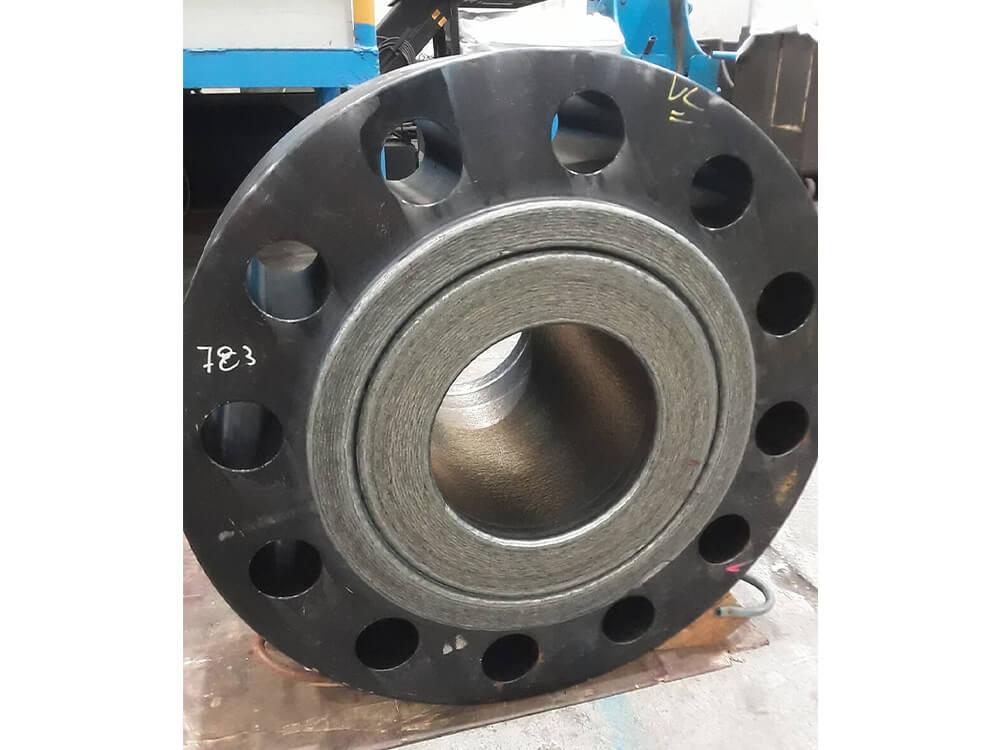
Weld Overlay Flanges
The weld overlay flanges adopts advanced automatic weld overlay technology, with low-cost carbon steel or low-alloy steel as the base, and a layer of corrosion-resistant alloy (such as nickel-based alloy 825, 625, 316L stainless steel, etc.) surfaced on the flange sealing surface and key contact parts. It combines the high strength of the base and the excellent corrosion resistance of the surfacing layer, replacing traditional pure alloy flanges, greatly reducing material costs, and meeting the harsh requirements of high-end working conditions.
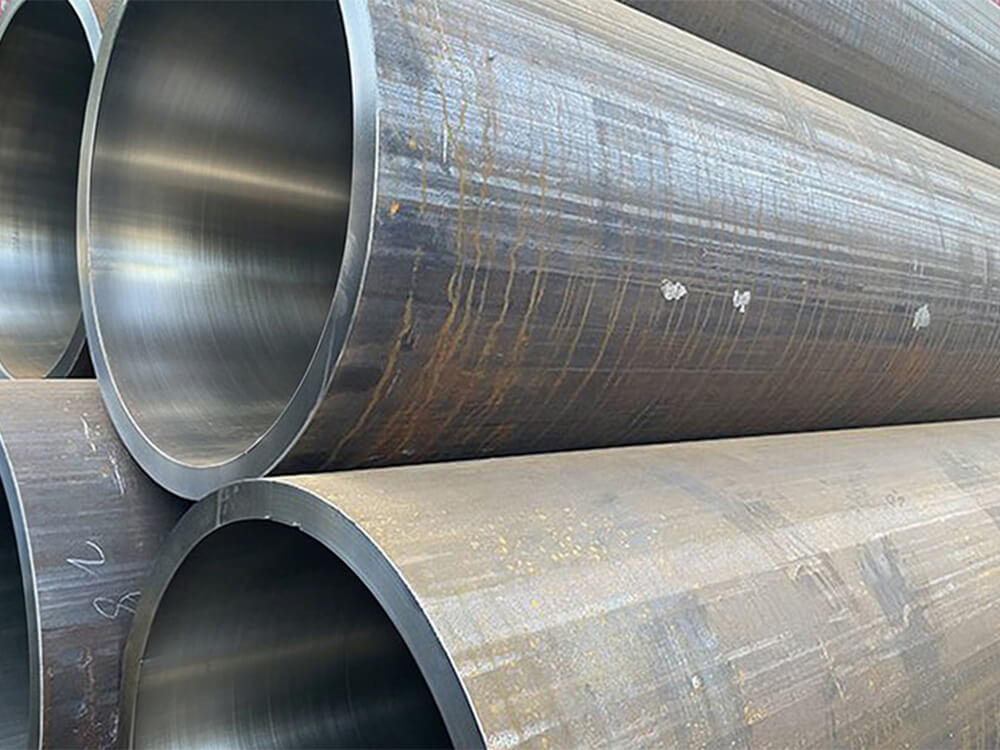
Clad Steel Pipe
The inner clad composite steel pipe is a bimetallic composite pipe with high-strength carbon steel or low-alloy line pipe steel as the base material, and a uniform layer of stainless steel, duplex steel, or nickel-based corrosion-resistant alloy cladding on the inner wall. It features corrosion resistance on the inner wall and pressure bearing on the outer wall. Through the metallurgical bonding process, the base and cladding achieve atomic-level firm bonding, with no gaps, no delamination, corrosion resistance and high pressure resistance. It is a new generation of high-end anti-corrosion and pressure-resistant pipeline products replacing pure alloy steel pipes, and surfacing pipe fittings.

-1.jpg)
loading...
It's already to the last piece of content!