 Zhongxin Tube

Bimetal Composite Pipe Fluid Transfer Solution for Pharmaceutical & Food & Beverage Industries
The pharmaceutical and food & beverage industries have extremely high requirements for fluid conveyance pipelines. Traditional pipes face multiple pain points in practical applications:
Health and Safety Risks
Traditional carbon steel pipes are prone to rust and scaling, which can contaminate media such as liquid medicines, purified water, and beverage stock solutions, affecting product purity and food safety; welds of some stainless steel pipes are prone to intergranular corrosion, breeding microorganisms and causing batch contamination.
Insufficient Corrosion Resistance:
Acid-base components in liquid medicines, organic acids in food and beverages, high-sugar/high-salt media, as well as high-temperature acid-base during CIP/SIP cleaning processes, can corrode the inner wall of pipes, leading to media contamination and pipe failure.
Conflict Between Cost and Service Life:
Pure high-grade stainless steel or special alloy pipes have high procurement and maintenance costs, while ordinary stainless steel pipes have insufficient corrosion resistance. Frequent replacement will affect production continuity and increase operation and maintenance costs.
Compliance Pressure:
Pipeline systems need to meet industry standards such as GMP, FDA 21 CFR, and 3-A. Traditional pipes are difficult to balance hygiene, corrosion resistance and economy, and cannot adapt to high-standard production requirements.
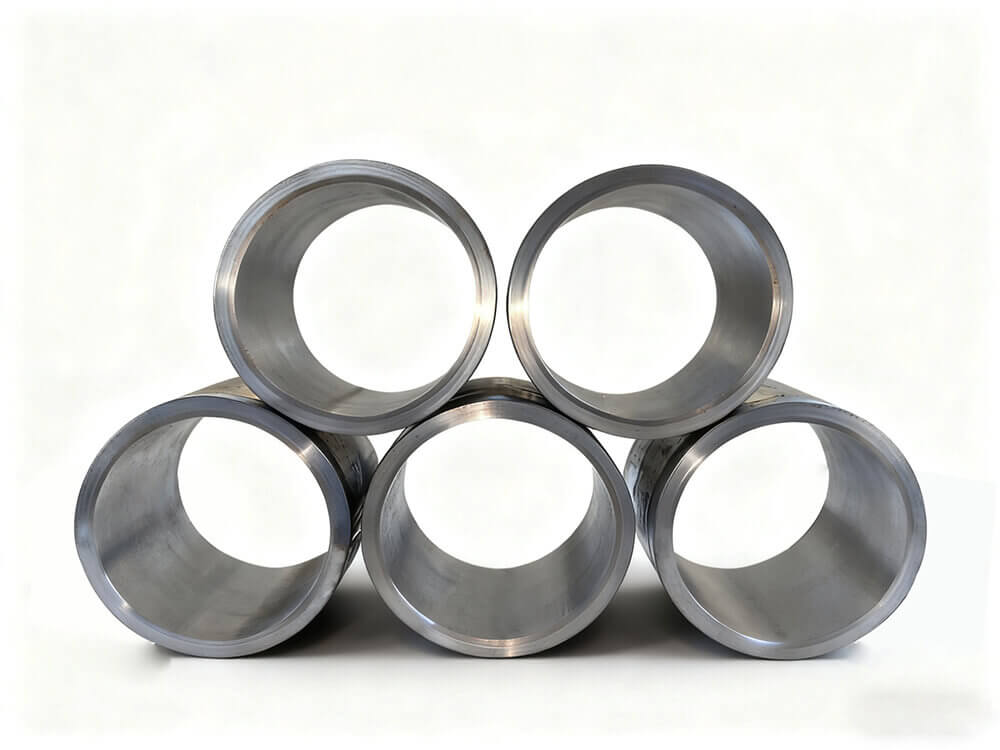
Our bimetallic composite pipes adopt a composite structure of "hygienic corrosion-resistant alloy inner liner + high-strength carbon steel outer layer", providing a fluid conveyance solution that balances safety, compliance and cost for the pharmaceutical and food & beverage industries:
Hygienic Corrosion-Resistant Alloy Inner Liner:
Selected food/pharmaceutical grade stainless steel such as 316L, 304L and duplex steel, the inner wall is polished with low roughness, not easy to scale and free of dead corners. It can resist corrosion from liquid medicines, food media and CIP/SIP cleaning media, meeting the requirements of hygienic fluid conveyance.
High-Strength Carbon Steel Outer Layer:
High-quality carbon steel is used as the base layer to provide sufficient structural strength and pressure-bearing capacity, adapting to pressure conveyance and hoisting installation conditions in the plant, while reducing the overall pipe cost.
Reliable Composite Process:
The double layers are tightly combined through mechanical composite or metallurgical composite, with no gap between the inner liner and the outer layer. The inner wall is smooth and flat, and conventional hygienic welding processes can be adopted to meet the cleaning and sterility requirements of GMP for pipeline systems.
Typical Application Scenarios
Pharmaceutical Industry:
Purified water/injection water conveyance pipelines, liquid medicine conveyance pipes, supporting pipelines for biological fermentation tanks, and CIP/SIP cleaning system pipelines.
Food & Beverage Industry:
Beverage stock solution conveyance pipelines, dairy/beer/brewing process pipelines, food additive conveyance pipes, and high-temperature sterilization system pipelines.
Core Advantages of the Solution
✅ Hygienic and Safe, Eliminating Contamination: The food/pharmaceutical grade inner liner alloy has a smooth and corrosion-resistant inner wall, no precipitation or dissolution, avoiding media contamination, ensuring product purity and food safety, and complying with industry standards such as GMP and FDA.
✅ Long-Term Corrosion Resistance, Adapting to Complex Working Conditions: The inner liner can resist corrosion from organic acids, acid-base cleaning fluids, and high-salt and high-sugar media, reducing the risk of pitting and crevice corrosion, extending the service life of pipes, and reducing replacement frequency.
✅ Cost Reduction and Efficiency Improvement, Balancing Economy: Compared with pure high-grade stainless steel pipes, bimetallic composite pipes can significantly reduce procurement costs, while reducing losses caused by production suspension and maintenance, and batch scrapping due to pipe corrosion, improving production continuity.
✅ Compliance Adaptation, Full-Scenario Coverage: Customizable inner liner materials and specifications are available to adapt to different hygiene level requirements from low to high in the pharmaceutical and food & beverage industries. It can be matched with hygienic pipe fittings and valves to achieve a system-level compliance solution.
Recommended Products
RecommendationsBi-Metal Composite Steel Pipe Solution For Oil & Gas
Corrosion poses a persistent and critical challenge in oil and gas production and transportation. Harmful media such as CO₂, H₂S, seawater, and chlorides in crude oil and natural gas continuously degrade pipeline integrity, weaken structural strength, and threaten operational safety. Jiangsu Zhongxin Pipe Sci-Tech Co., Ltd. (Zonpipe) delivers high-performance CRA solutions to safeguard your pipeline infrastructure, minimize costly repairs, reduce downtime, and prevent economic losses.
Weld Overlay Clad Steel Pipe
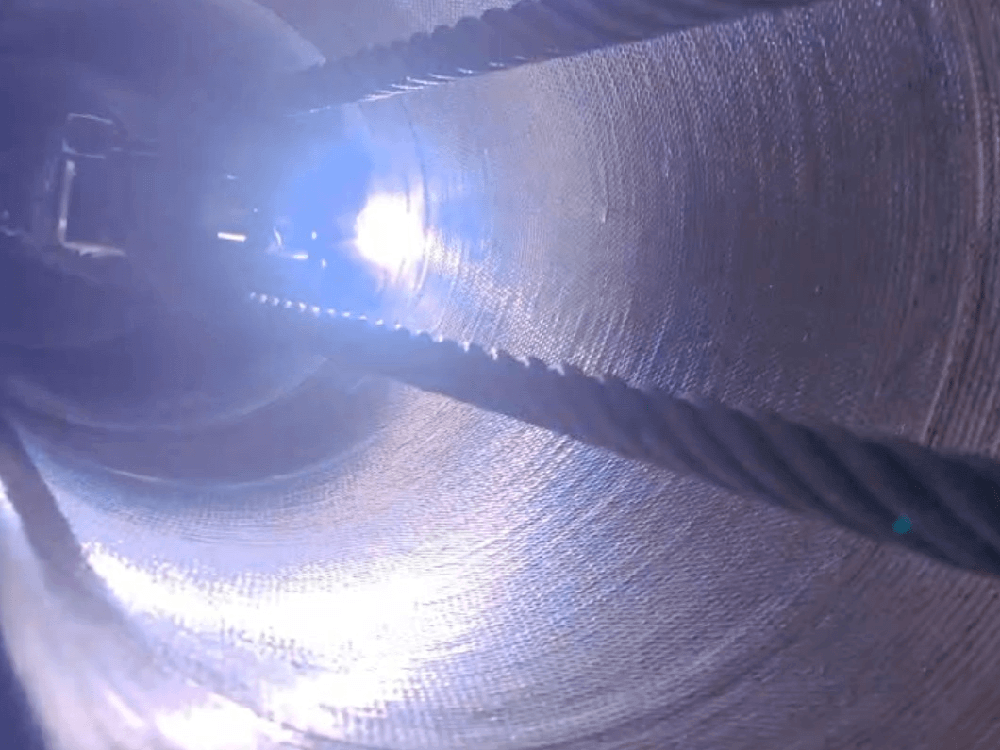
The weld overlay clad steel pipe adopts advanced automatic weld overlay technology to clad a layer of high-wear-resistant, corrosion-resistant and high-temperature-resistant alloy materials (such as nickel-based alloy 825, 625, duplex stainless steel, etc.) on the inner wall of the base pipe. By accurately controlling the cladding thickness and dilution rate, it achieves perfect integration of the base pipe and the surfacing layer, significantly improving the service life and safety performance of the pipe under extreme working conditions. The product is accurately adapted to designated high-end industries and widely used in heavy industrial fields such as oil and gas (offshore oil and gas platforms, downhole oil and gas transmission pipelines), chemical industry (supporting pipelines for high-end chemical reactors, transportation of corrosive media), marine engineering (seawater desalination, offshore platform pipe networks), and electric power (nuclear power plant cooling systems, high-temperature and high-pressure pipelines in power plants). It is the core solution to replace traditional lined pipes and integral alloy pipes.
Bimetallic Composite Pipes - Power Industry Pipeline Corrosion Solutions
In thermal power, nuclear power, new energy (offshore wind, photovoltaic energy storage) and UHV power facilities, pipeline systems face severe corrosion. Acidic slurry (SO₂, NOₓ) in FGD systems, high-temperature/high-pressure steam and seawater/freshwater corrosion in nuclear islands, salt spray in offshore wind, and corrosive media in UHV converter stations cause pitting, stress corrosion cracking and rust in traditional pipelines. Single-material pipelines (carbon steel, pure alloy) either lack corrosion resistance, have short service life and frequent maintenance, or are costly, endangering operation safety and increasing costs.
Mechanically Lined Steel Pipe(MLP)
Adopting advanced mechanical spinning composite technology, the mechanical composite steel pipe closely bonds two complementary metal materials (usually carbon steel as the base pipe, and stainless steel, duplex steel, nickel-based alloy, titanium alloy, or Monel alloy as the inner liner) through elastic and plastic deformation. It requires no high-temperature fusion, featuring full-process green environmental protection and high energy efficiency. Strictly complying with international and industry standards such as API-5LD, DNV-ST-F101, SHELL DEP 31.40.20.32-Gen., ADNOC-AGES, GB/T31940, and CJ/T 192, the product combines the high strength and high pressure-bearing capacity of the outer base pipe with the corrosion resistance and wear resistance of the inner cladding, effectively solving the industry pain points of "insufficient strength" or "poor corrosion resistance" of single-material pipes.

loading...
It's already to the last piece of content!