 Zhongxin Tube

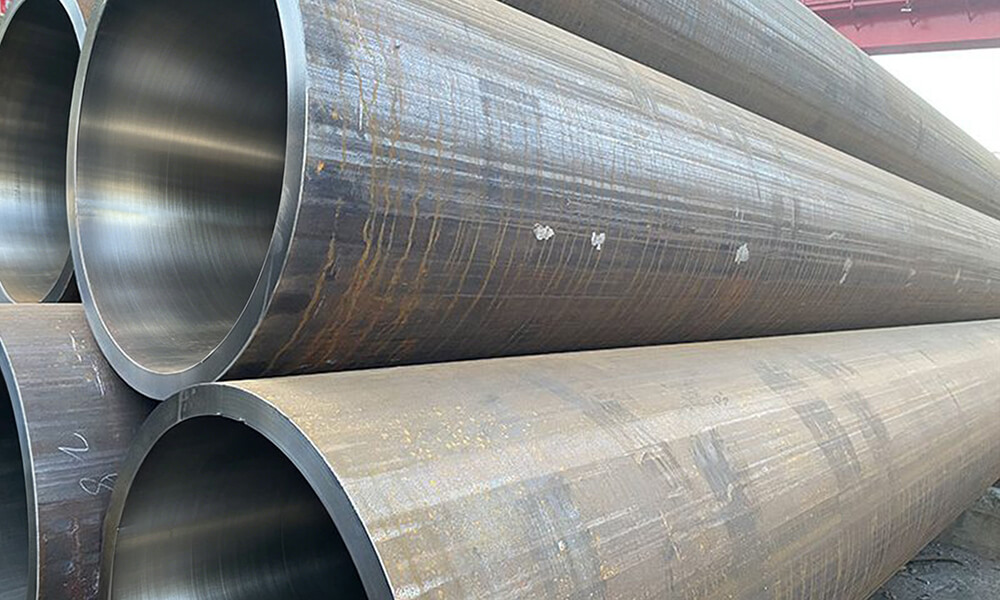
Clad Steel Pipe
The inner clad composite steel pipe is a bimetallic composite pipe with high-strength carbon steel or low-alloy line pipe steel as the base material, and a uniform layer of stainless steel, duplex steel, or nickel-based corrosion-resistant alloy cladding on the inner wall. It features corrosion resistance on the inner wall and pressure bearing on the outer wall. Through the metallurgical bonding process, the base and cladding achieve atomic-level firm bonding, with no gaps, no delamination, corrosion resistance and high pressure resistance. It is a new generation of high-end anti-corrosion and pressure-resistant pipeline products replacing pure alloy steel pipes, and surfacing pipe fittings.
Outer Base Layer (Pressure-bearing Layer): Adopts carbon steel/line pipe steel such as 20#, Q355B, L245(Gr B), L360(Gr X52), L415(Gr X60),L450(Gr X65), A106B, A53, which bears pipeline pressure, stiffness, strength, welding and external loads, with excellent mechanical properties, and can meet the requirements of high temperature, high pressure and long-distance transportation.
Inner Cladding Layer (Corrosion-resistant Layer): The inner wall is clad with corrosion-resistant materials such as 304, 316L, 2205, 2507 duplex steel, 825, 625 nickel-based alloy, which directly contacts corrosive media and resists corrosion from CO₂, H₂S, chloride ions, acids, alkalis, salts, seawater, oilfield produced water, etc.
Bonding Interface: Metallurgical fusion bonding, not mechanical interference, glue bonding, or surfacing superposition; high bonding strength, resistance to thermal expansion and contraction, vibration, and pressure impact, no gap corrosion, no delamination and detachment, and no leakage hidden dangers.
Recommended Products
RecommendationsMechanically Lined Steel Pipe(MLP)
Adopting advanced mechanical spinning composite technology, the mechanical composite steel pipe closely bonds two complementary metal materials (usually carbon steel as the base pipe, and stainless steel, duplex steel, nickel-based alloy, titanium alloy, or Monel alloy as the inner liner) through elastic and plastic deformation. It requires no high-temperature fusion, featuring full-process green environmental protection and high energy efficiency. Strictly complying with international and industry standards such as API-5LD, DNV-ST-F101, SHELL DEP 31.40.20.32-Gen., ADNOC-AGES, GB/T31940, and CJ/T 192, the product combines the high strength and high pressure-bearing capacity of the outer base pipe with the corrosion resistance and wear resistance of the inner cladding, effectively solving the industry pain points of "insufficient strength" or "poor corrosion resistance" of single-material pipes.
Mechanical Composite Pipes: Pipeline Solutions for Municipal Water Supply, Heating and Gas Industries
Municipal water supply, heating and gas pipelines are the "lifeline" of urban infrastructure, directly affecting residents' quality of life and urban operation. For years, traditional pipelines in municipal networks have been plagued by corrosion, leakage, high maintenance costs and short service life—issues that severely compromise network safety and stability. Mechanical composite pipes, with mature composite technology and outstanding overall performance, precisely address these municipal pain points, delivering efficient, durable and cost-effective full-scenario solutions for municipal water supply, heating and gas pipelines. Balancing practicality and economy, they ensure the long-term, reliable operation of urban infrastructure.
Bimetal Composite Pipe: Corrosion Solution for Offshore Engineering Pipelines
Offshore engineering operations, including deep-sea oil and gas development, subsea pipeline transportation, and offshore platform piping systems, operate under extreme corrosive conditions. Pipes are continuously exposed to multiple corrosive agents—high-salinity seawater, concentrated chloride ions, dissolved oxygen, carbon dioxide (CO₂), hydrogen sulfide (H₂S), and marine microorganisms—compounded by deep-sea high pressure, temperature fluctuations, and wave impacts. These harsh environments often lead to premature pipeline corrosion failure, threatening the safe and stable operation of offshore projects, shortening service life, and even triggering catastrophic safety incidents and substantial economic losses.
Bi-Metal Composite Steel Pipe Solution For Oil & Gas
Corrosion poses a persistent and critical challenge in oil and gas production and transportation. Harmful media such as CO₂, H₂S, seawater, and chlorides in crude oil and natural gas continuously degrade pipeline integrity, weaken structural strength, and threaten operational safety. Jiangsu Zhongxin Pipe Sci-Tech Co., Ltd. (Zonpipe) delivers high-performance CRA solutions to safeguard your pipeline infrastructure, minimize costly repairs, reduce downtime, and prevent economic losses.

loading...
It's already to the last piece of content!